
· Demand for skilled tourism workforce in Vietnam: Vietnam targets 50 million international visitors and 15-17% GDP contribution by 2030, but not many industry workers meet global standards, lacking sustainable management and exceptional service skills, necessitating world-class training.
· Swiss model of excellence: Switzerland overcame competition through investments in training, premium products, and sustainable management, led by EHL Hospitality Business School, producing a globally sought-after, sophisticated workforce.
· ST4SD delivers Swiss expertise to Vietnam: Led by VNAT, funded by SECO, ST4SD offers flexible, affordable three-level EHL training, implemented through major city institutions, aiming to standardize tourism human resources nationwide.
· Sustainable future: The program empowers SMEs and officials, with plans to scale via financial support and PPP, enabling Vietnam to build a competitive, sustainable tourism brand globally. (149 words)
Vietnam’s tourism industry is rising, but to reach global peaks, it needs a sharp, sustainable workforce ready to lead trends. The Swiss Tourism for Sustainable Development (ST4SD) project, funded by the Swiss Government through the Swiss State Secretariat for Economic Affairs (SECO), led by the Vietnam National Authority of Tourism (VNAT), and implemented by HELVETAS Vietnam and CRED, offers a strategic solution. With EHL Hospitality Business School – the world’s leading hospitality management school – the Swiss Hospitality and Tourism Management Training Program promises to elevate human resources, contributing to Vietnam’s Tourism Development Strategy to 2030 and beyond.
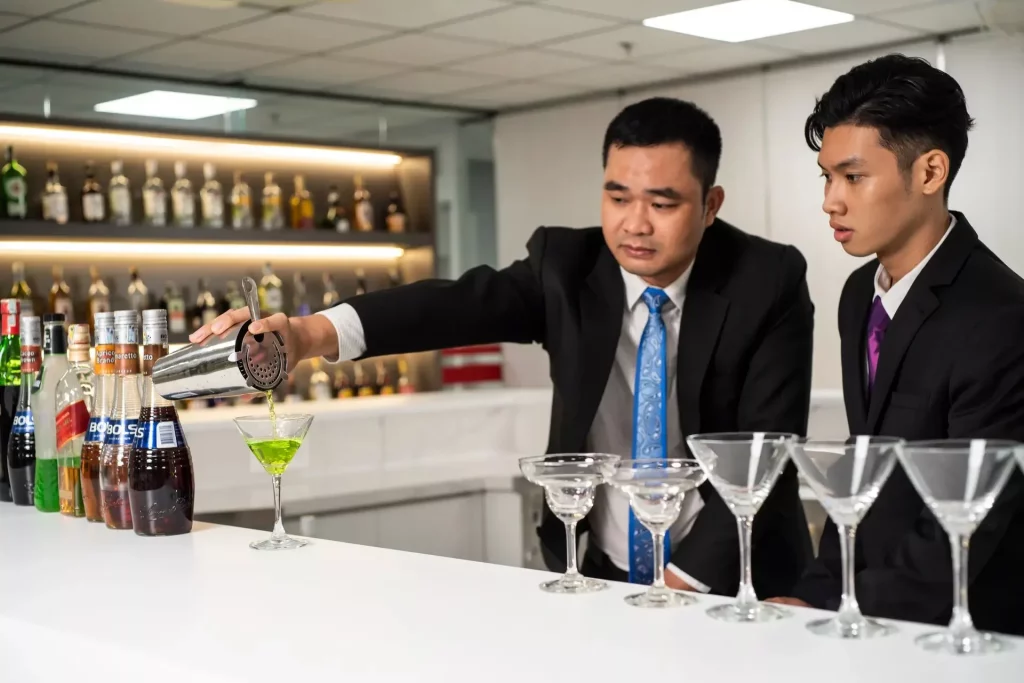
Source: The Faculty of Tourism – VLU
Vietnam: Need for Quality Workforce to Lead Sustainable Trends
The Vietnamese government has positioned tourism at the core of the economy. Resolution 08-NQ/TW (2017) declares tourism a key economic sector, requiring sustainable development tied to cultural and natural resource preservation. The 2017 Tourism Law emphasizes sustainable tourism balancing economic, social, and environmental benefits without harming the future. Decision 147/QD-TTg (2020) sets ambitious goals: by 2030, attract 50 million international visitors, contributing 15-17% to GDP, necessitating an internationally standardized workforce. Resolution 82/NQ-CP (2023) further promotes tourism recovery, prioritizing unique products and professional services.
In reality, Vietnam’s tourism has made significant strides. In 2023, the country welcomed 12.6 million international and 108 million domestic visitors, contributing about 8% to GDP, and was honored as the “World’s Leading Heritage Destination” at the 2022 World Travel Awards. However, human resources remain a bottleneck. According to VNAT, only a part of tourism personnel meet international standards. A lack of exceptional service mindset and sustainable management skills hinders Vietnam’s competition with Thailand or Singapore, especially in serving high-spending clients demanding personalized experiences. Mid- and senior-level personnel are scarce, unfamiliar with sustainable operations in F&B, housekeeping, or strategic leadership. Experience in community-based and eco-tourism is nascent, limiting potential exploitation nationwide.
Globally, sustainable tourism is an irreversible trend, guided by GSTC criteria emphasizing environmental protection, local culture celebration, and enhanced guest experiences. Switzerland, with its outstanding human resource training and destination management, is an ideal model. Vietnam needs an affordable, world-class training program to bridge this gap, and ST4SD is the answer.
Lessons from Switzerland: Quality Over Quantity
Switzerland is not only a renowned tourism destination with its majestic Alps and quaint towns but also a symbol of sophistication in tourism management and training. Instead of chasing volume, Switzerland chose quality. The government collaborated with the private sector to invest heavily in training, premium tourism products, and sustainable management. As a result, Switzerland confirms its position as a dream destination for the most discerning clients, from elites to those seeking unique experiences.
The key lies in proactive government policies. Switzerland built an effective public-private partnership (PPP) model, where authorities, businesses, and communities share benefits and responsibilities. Tax incentives, financial support, and vocational training encouragement helped small businesses grow sustainably. Destination management policies focused on preserving natural resources, such as restricting haphazard construction in the Alps, and protecting traditional culture through local festivals. These efforts retained tourists and created stable jobs for locals.
Switzerland’s greatest strength is its human resource training system. EHL Hospitality Business School, founded in 1893 in Lausanne, is a living testament. Leading the QS World University Rankings for hospitality management for seven consecutive years, EHL teaches not only skills but also fosters an exceptional service mindset and social responsibility. EHL students are trained from crafting a perfect coffee to managing international hotel chains, always prioritizing guest experience and sustainability. Courses combine hands-on practice in simulated hotels, real-world case studies, and exposure to industry leaders, preparing students for any challenge. This model has produced a Swiss workforce sought after worldwide, from 5-star resorts to international tourism organizations.
Switzerland shows that high-quality human resources are key to building a sustainable tourism brand. A guide must not only tell stories but also transform them into unforgettable experiences while respecting the environment and local communities.

Source: EHL
ST4SD: Bringing EHL Excellence to Vietnam
The ST4SD project bridges Swiss training excellence to Vietnam, with EHL as a core partner. Funded by SECO, led by VNAT, and implemented by HELVETAS Vietnam and CRED, ST4SD aims to standardize tourism human resources, helping Vietnam rise in the global value chain. The Swiss Hospitality and Tourism Management Training Program is designed with three levels – basic, intermediate, and advanced – with flexible durations of up to one month per level, suitable for new staff to senior managers.
At the basic level, trainees gain foundations in communication, hygiene, customer service, and sustainable operations, enabling staff at destinations like Ha Giang homestays to make strong first impressions. The intermediate level targets managers and small business owners, focusing on eco-friendly F&B management, hotel etiquette, and cultural awareness, such as designing waste-reducing menus. The advanced level prepares future leaders, delving into exceptional service, sustainable leadership, and managerial communication, equipping officials to craft long-term destination strategies. Tailored for Vietnam, the curriculum emphasizes personalized services and local culture preservation, meeting the demands of discerning international clients and eco- and community-based tourism trends.
The program stands out for its affordability, fitting small and medium enterprises’ budgets. Its flexible delivery – 80% online via EHL’s Learning Management System (LMS) and 20% in-person practice – ensures accessibility even in remote areas. To ensure nationwide impact, the program is implemented through four pioneering institutions in major cities: National Economics University (Hanoi), Van Lang University (HCMC), IBH Hospitality Academy (Da Nang), and Saigon Tourism College (HCMC). In the pilot phase, 17 Vietnamese trainers were trained by EHL through the Train-the-Trainer method. Trainees have the opportunity to receive EHL certificate per level, affirming global market credibility.
Uniquely, the program serves not only the private sector but also trains public officials to enhance sustainable tourism management nationwide. In the pilot phase, ST4SD conducts foundational courses in Ha Giang, Quang Nam, and Dong Thap, with plans to train Ha Giang officials in 2025. Courses help officials develop sustainable tourism policies and manage destinations effectively, such as planning H’Mong community tours or preserving Cham culture. After the pilot, the model will scale nationwide. This strategic move integrates global perspectives into local management, directly supporting the 2030 Tourism Development Strategy.
Sustainable Prospects: Swiss Lessons, Global Reach
The Swiss Hospitality and Tourism Management Training Program is key to aligning Vietnam’s tourism workforce with global standards. Affordable and flexible, it is ideal for small and medium enterprises (SMEs), which dominate the tourism sector. A Quang Nam homestay, after intermediate training, can personalize services and use local resources, boosting revenue while fostering sustainable development. A Dong Thap guide can design tours showcasing local agricultural culture, blending sustainable experiences to attract international visitors. These small changes create ripple effects, improving community livelihoods and enhancing destination prestige.
To scale the model, the government must provide financial support and integrate the program into national training strategies. Subsidized tuition, PPP collaborations, or SME grants will enable the program to reach every province, from urban hubs like Hanoi to remote areas like Cao Bang. If implemented cohesively, the model could train tens of thousands annually, meeting VNAT’s projected need for 50,000 high-quality workers.
Switzerland’s model is worth emulating. A leading tourism market, Switzerland attracts diverse visitors, from elites seeking luxury resorts to backpackers exploring rural culture. Their stringent service and sustainability demands have created a refined tourism industry where every experience is meticulously crafted. Vietnam, aiming for 50 million international visitors, seeks to serve high-end clients and build a sustainable destination brand. The Swiss Hospitality and Tourism Management Training Program is the starting point, bringing Swiss excellence to train Vietnam’s workforce to meet global expectations.
The program is not just a course but a foundation to propel Vietnam’s tourism forward. Guided by SECO, EHL, VNAT, and partners, it lays the first brick for a modern, sustainable, competitive tourism industry, helping Vietnam shine on the global map.