
On 4 and 5 December 2025, the Vietnam National Authority of Tourism (VNAT) in coordination with the Lam Dong Provincial Department of Culture, Sports and Tourism and the Swiss Tourism for Sustainable Development in Vietnam (ST4SD) Project organized the National Annual Green Tourism Forum in Lam Dong province.
The primary objective of the Forum was to serve as an initiative for implementing Vietnam’s National Strategy and Action Plan on Green Growth for the 2021–2030 period, with a long-term vision to 2050. It also aimed to promote the execution of key governmental directives, such as Resolution No. 82/NQ-CP and Directive 08/CT-TTg, which focus on accelerating recovery and ensuring comprehensive, sustainable development within the tourism sector.
This event marks the first annual Forum of its kind, designed to greatly enhance awareness and encourage proactive, positive actions among all stakeholders, including government agencies, businesses, and local communities, working on green tourism practices in Vietnam. The goal is to initiate a substantial shift from awareness to concrete actions in green tourism implementation. This transformation is crucial for reshaping the image of Vietnamese tourism to better align with global market demands and international trends, thereby boosting Vietnam’s competitiveness as a destination on the global tourism map.
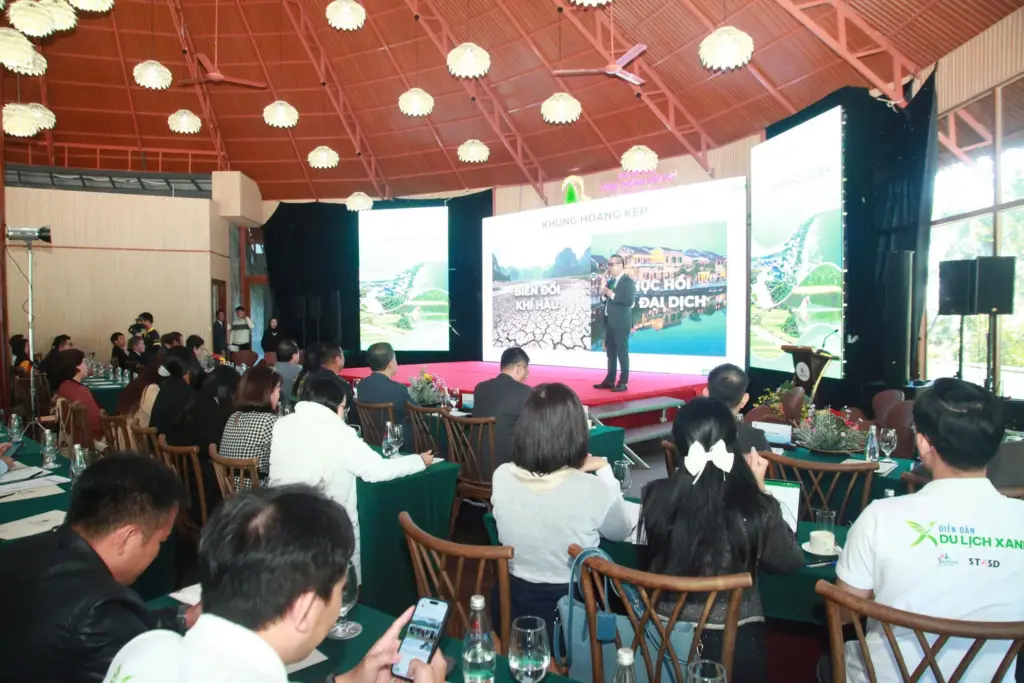
Mr. Nguyễn Trùng Khánh, Chairman of the Vietnam National Authority of Tourism (VNAT, stated at the opening remarks: “We are standing at a critical crossroads. The Vietnamese tourism sector, with its impressive recovery and growth, has gradually affirmed its position as a key economic sector. However, the impacts of climate change, environmental pollution, and the pressure from overcrowding at destinations are sounding an alarm about sustainable development and the balance between efficiently exploiting tourism resources and protecting the environment and enhancing the competitiveness of destinations. In the face of this challenge, green tourism is no longer a choice but has become a necessity for action and sustainable development.
He emphasized: “Nevertheless, green tourism is not merely a slogan or a temporary trend. It is a holistic development mindset, a consistent approach to action, and a long-term process that requires awareness and the participation of the entire society to change the way resources are exploited, tourism services are provided, and to influence tourism consumption habits, enhance the capacity and effectiveness of tourism management. And above all, it is about raising the awareness and responsibility of every enterprise, every tourist, and the local community.”
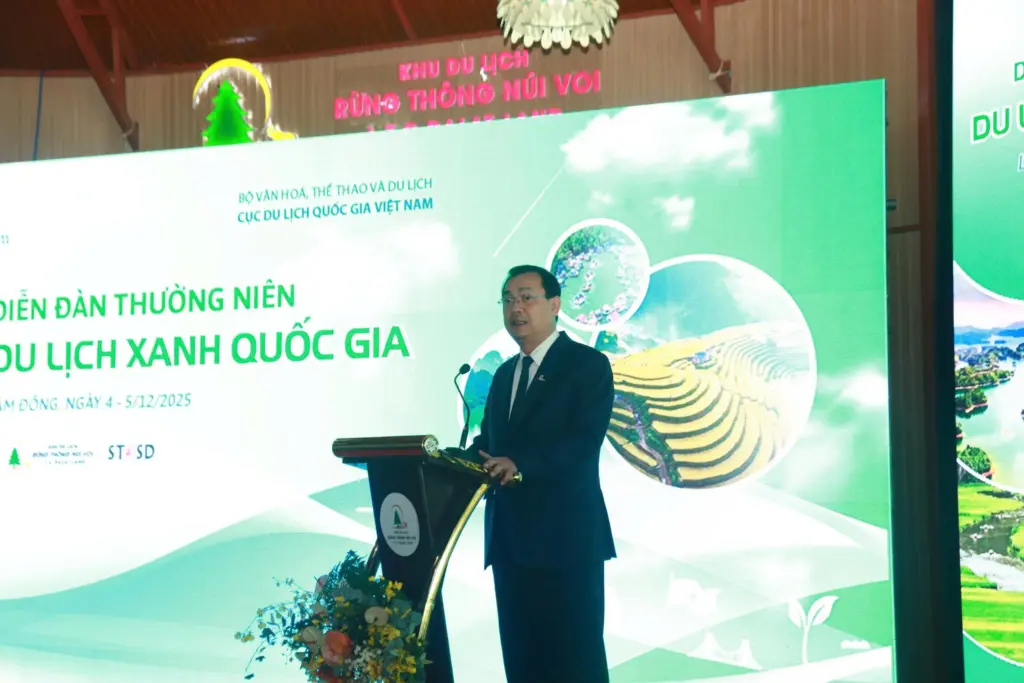
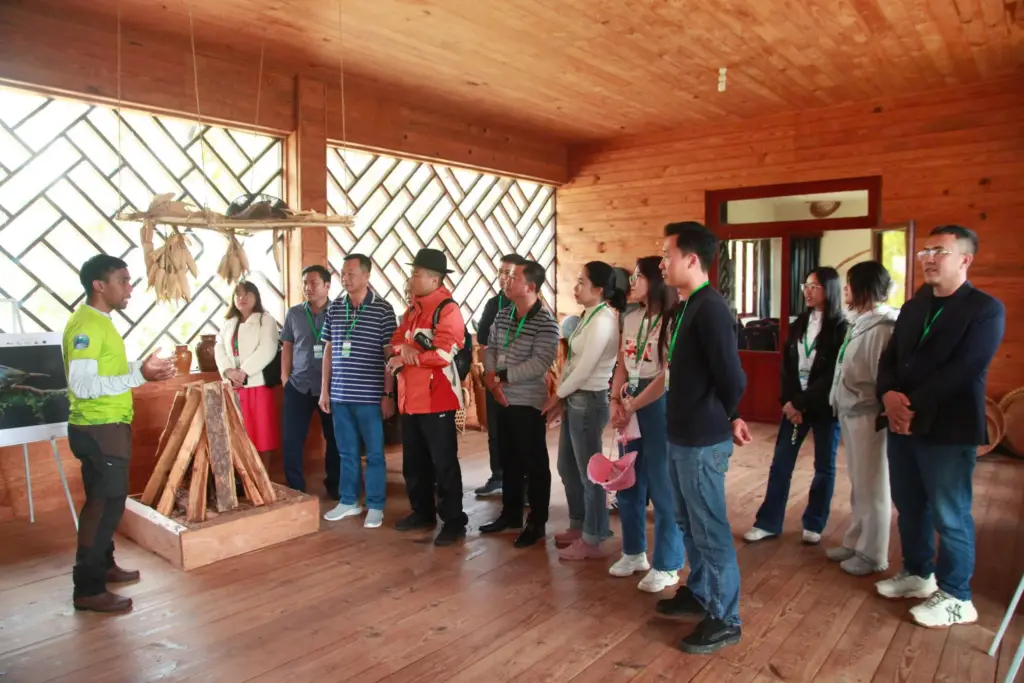
The Forum included two main components: field activities involving surveys and research on several existing green tourism models in Lam Dong province, and main discussion sessions. Over 100 delegates are expected to participate, comprising leaders and staff from the Ministry of Culture, Sports and Tourism and related provincial departments, representatives from tourism associations and businesses, tourism training institutions, policy experts including international experts from Switzerland.
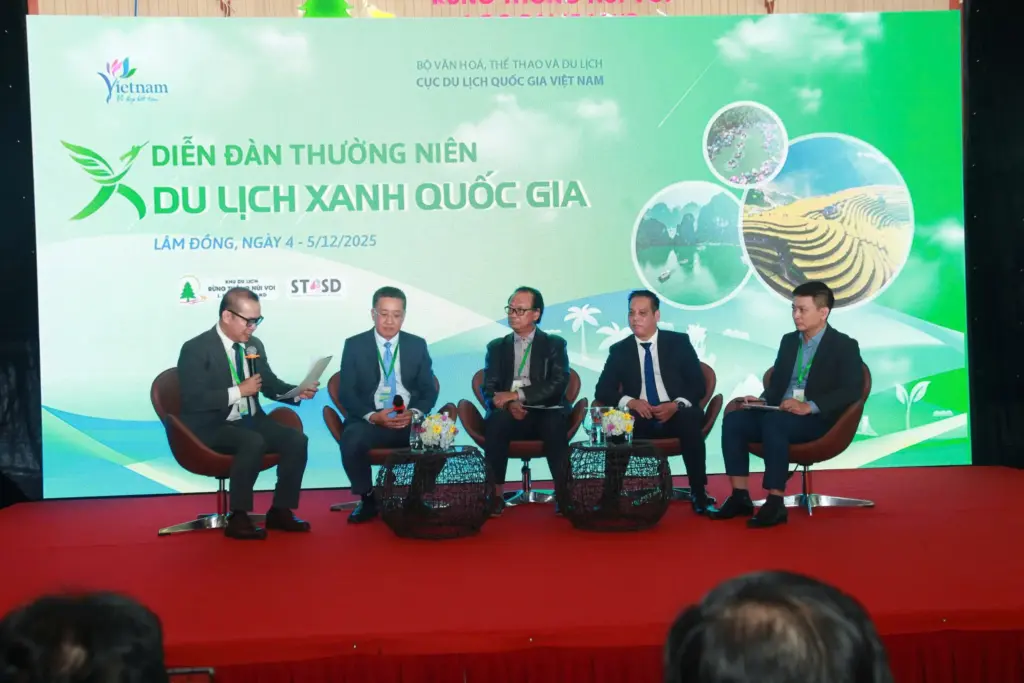
The discussions are centered around two key sessions. Session 1, titled “Models, Initiatives, and Policies for Green Tourism Destination Management in Vietnam – Perspectives from Stakeholders,” offers a broad overview of green tourism development, highlighting global models, experiences, and green transition initiatives, alongside showcasing exemplary domestic practices.
Session 2, titled “Action Framework for Developing Green Tourism in Vietnam in the New Context,” concentrates on discussing critical tasks and specific solutions for the future. Key deliverables from this session include the development of a Green Transition Toolkit, which will incorporate a set of criteria for green tourism development; the establishment of a stakeholder network for the transition process; and proposals for mechanisms to encourage innovative and creative ideas to promote the development of green tourism and effective green tourism destination management in Vietnam.
The National Green Tourism Annual Forum discussed and proposed a green action framework until 2030 with three main pillars:
Pillar 1, Tools to Promote Green Tourism, focuses on creating measurement and incentive tools:
- Sustainable Tourism Development Indicators: Develop a set of indicators based on international best practices and Vietnamese context. These indicators will be piloted in key areas before nationwide implementation, serving as the foundation for proposing that the Government mandate synchronous green transformation
- Green tourism label: Research and establish a green tourism label based on international standards for tourism products and brands. This label will be used to classify qualified products and services and facilitate connection with international networks.
- Green tourism awards: Organizing periodic selection and awards ceremonies, with regulations consistent with international and Vietnamese standards. The awards will timely recognize and encourage organizations with good practices, preparing them for international award nominations.
- Green tourism initiatives: Organizing activities to promote ideas, practical experiences, and technology application. The goal is to generate a positive impact and achieve widespread communication.
Pillar 2, promoting institutional innovation and green tourism policy, focuses on completing the legal framework and measurement system:
- Policy adjustment: Adjust and mainstream green tourism regulations within legal documents. This aims to create a favorable legal framework for green tourism development, generate momentum, and mobilize social resources to accelerate green tourism development and international integration.
- Indicator integration: Proposing the integration of sustainable tourism development indicators into the national tourism statistics system.
Pillar 3, supporting the promotion of green tourism, focuses on capacity building, promotion, and connectivity:
- Capacity building: Organize the National Annual Forum, trainings, and promotion to raise awareness and facilitate a transition from planning to action on green tourism.
- Destination promotion: Support the promotion of green tourism with at least one digital platform, while strengthening tourism promotion capacity to attract various sectors to participate in developing green tourism.
- “Best Tourism Villages” Network: Establish a catalog of destinations, serving as a basis for selection and connection with the international network of the United Nations Tourism international network.
- International cooperation: Partner with international organizations to implement projects and programs that support green and sustainable tourism development. This cooperation aims to facilitate the transfer of experience, techniques, and technology in green tourism governance and operation. The outcome will be the refinement of pilot models for nomination for national and international awards, and the widespread communication and promotion of successful cases.